sauna history
The History of Baths and Saunas: From Ancient Times to the Present
Heat and Steam — The Beginning of a Tradition
It is impossible to determine exactly where and when the first bath appeared. Researchers believe it began shortly after humans learned to control fire. When water accidentally splashed onto heated stones, it turned into hot steam, filling the space with warm, humid air.
This simple physical phenomenon became the foundation of a tradition that has endured for thousands of years.
Early Steam Structures
Among ancient nomadic peoples, portable steam structures existed that resembled tents. Heated stones were placed in the center, and water or herbal infusions were poured over them. Steam filled the enclosure, creating a cleansing and relaxing effect.
Similar practices were found among the Scythians, the peoples of Central Asia, and northern European tribes.
Ancient Baths: Architecture and Engineering
In Ancient Greece and especially in Rome, bathing became an essential part of public life. Roman thermae were large architectural complexes featuring pools of varying temperatures, relaxation halls, and advanced heating systems known as the hypocaust, which warmed floors and walls from beneath.
These baths were not only places for washing but also centers of social interaction, philosophical discussion, and leisure.
Eastern Traditions
In the East, the hammam developed as a gentle steam bath with moderate temperatures and high humidity. Unlike northern saunas, the hammam emphasized warm steam and gradual heating. It became an integral part of urban culture and religious life.
The Northern Tradition: The Birth of the Sauna
In Northern Europe, bathing traditions evolved differently. In Finland and Scandinavia, the central feature became the “room of heat” with heated stones.
Early saunas were smoke saunas, built without chimneys. Smoke filled the room during heating and was later ventilated before use. These structures retained heat exceptionally well.
The Finnish word löyly describes the wave of steam created when water is poured onto hot stones. For Finns, it represents more than physics — it is the essence of the sauna experience.
Today, Finland has approximately three million saunas for a population of about 5.5 million people. Saunas are part of everyday life — found in homes, offices, and even government buildings.
In 2020, Finnish sauna culture was inscribed on UNESCO’s Representative List of the Intangible Cultural Heritage of Humanity.
The Russian Banya and the Venik
The Russian banya developed alongside the northern sauna tradition but has its own distinctive features — higher humidity and the active use of the venik (a bundle of birch branches).
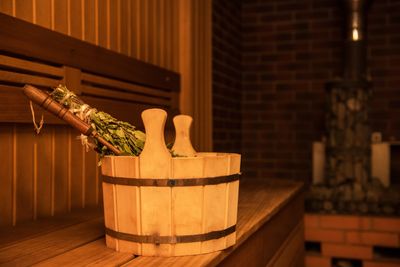
The birch whisk is more than an accessory; it is an essential ritual element. Gentle tapping enhances the sensation of heat, stimulates circulation, and fills the steam room with the fresh aroma of leaves.
Historical chronicles mention bathhouses as early as the 5th century. The banya was seen not only as a place of cleansing but also as a space of renewal — a place to “wash away” fatigue and begin anew.
The Bathhouse as a Sacred Space
In northern traditions, the bathhouse was considered a special and almost sacred place. It was often the cleanest room in the household. Births took place there, the sick were treated, and important family rituals were performed.
Folklore even speaks of bathhouse spirits who protected the space and punished disrespect.
Development in the 20th Century
In the 20th century, saunas underwent technological transformation. Electric heaters were introduced, ventilation systems improved, and temperature standards were established.
Today, there are:
• traditional wood-burning and electric saunas
• infrared saunas
• hybrid models
Yet the core principle remains the same: heated stones, water, and the alternation of heat and rest.
Health Benefits and the Modern Perspective
Modern studies suggest an association between regular sauna use and improved well-being, as well as reduced risks of certain cardiovascular conditions (based on observational data).
It is important to understand that sauna use supports overall health but does not replace medical treatment or physical activity. Moderation and attention to personal well-being are key.
Materials: Wood as the Foundation of Comfort
Throughout history, wood has played a central role in bathing culture. It is wood that makes contact with hot surfaces comfortable and safe.
Traditionally, hardwood species are used for sauna interiors:
• Aspen
• Alder
• Linden
These woods have low thermal conductivity, do not release resin, and remain comfortable even at high temperatures. Modern thermal modification enhances wood stability under heat and humidity cycles while preserving its natural qualities.
The Sauna Today
Today, the bath and sauna represent:
• a place of restoration
• a space for connection
• an element of private and countryside homes
• a part of modern wellness culture
Technologies evolve and materials improve, yet the core formula remains unchanged:
heat + water + natural wood.